
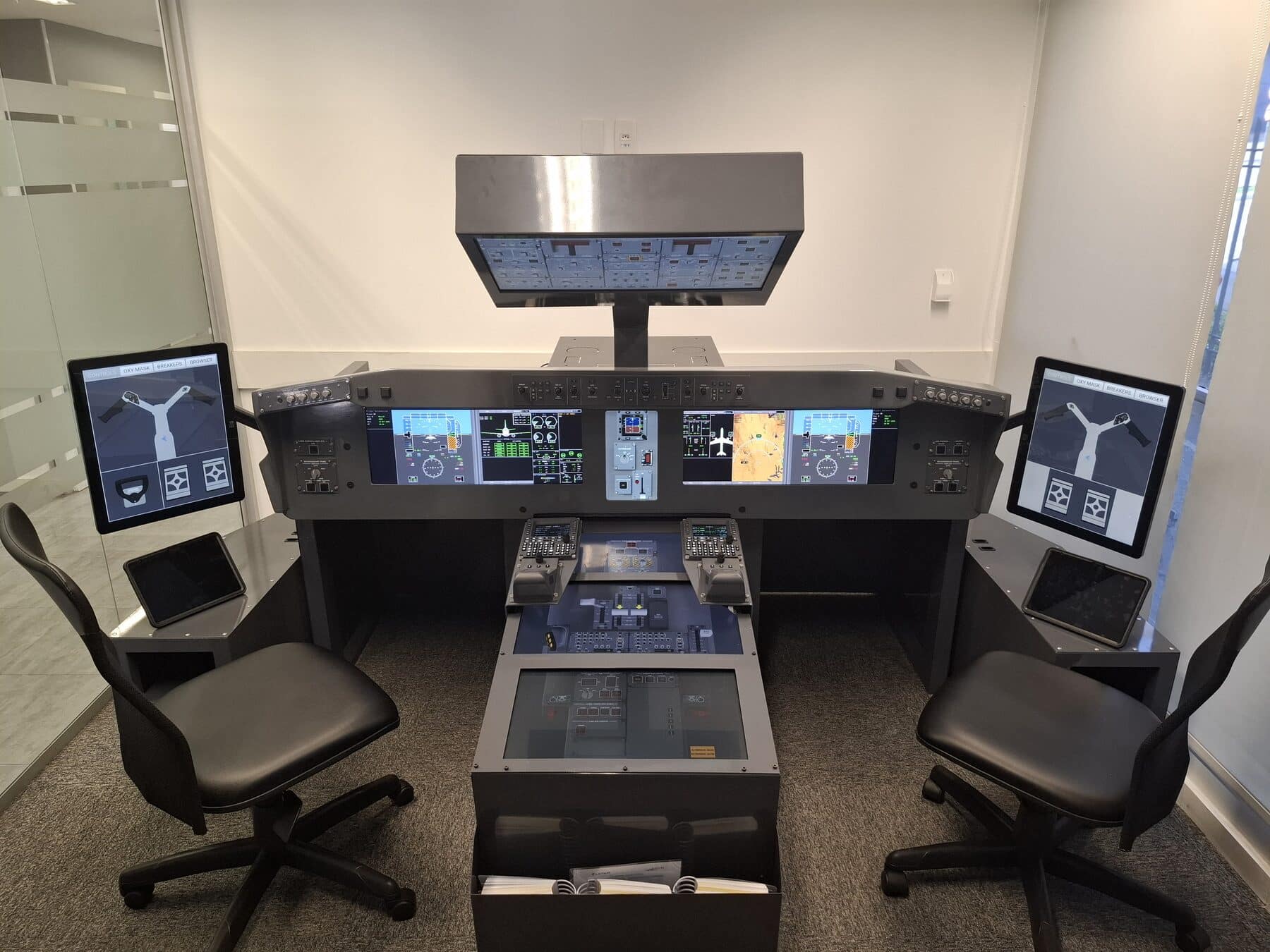
FTD E195-E2
Flight training device for E195-E2 captains and first officers. Interactive, functional systems, complete avionics, more than 170 malfunctions and a tablet-based instructor station.
RNP APCH · RNP ARAutoland, RF legs and published vertical path
Procedures, systems and instrument flight sessions.
The E195-E2 FTD was designed for Cockpit Procedures Training (CPT), systems training, malfunctions, abnormal and emergency procedures, and FMS and autopilot operation. Captain and first officer train together, as Pilot Flying and Pilot Monitoring, with standardized procedures and checklists.
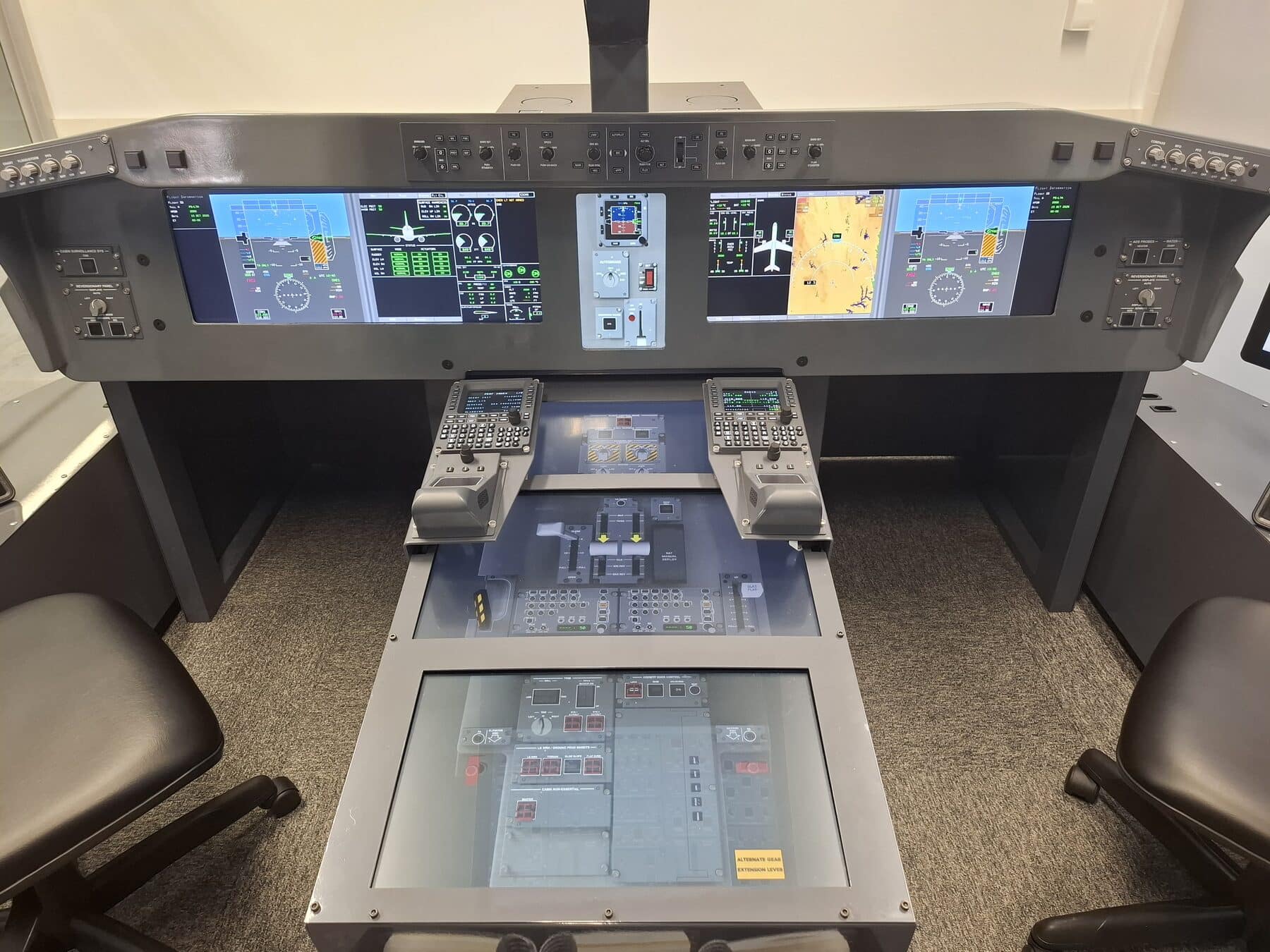
All systems interactive and functional.
Each system follows the logic of the aircraft operating manual, with synoptic pages, EICAS messages, aural alerts and display indications. Engine start, pneumatic configuration and pressurization respond to what the pilots do on the panel.
From engine start to landing, with the FMS and autopilot.
Approaches
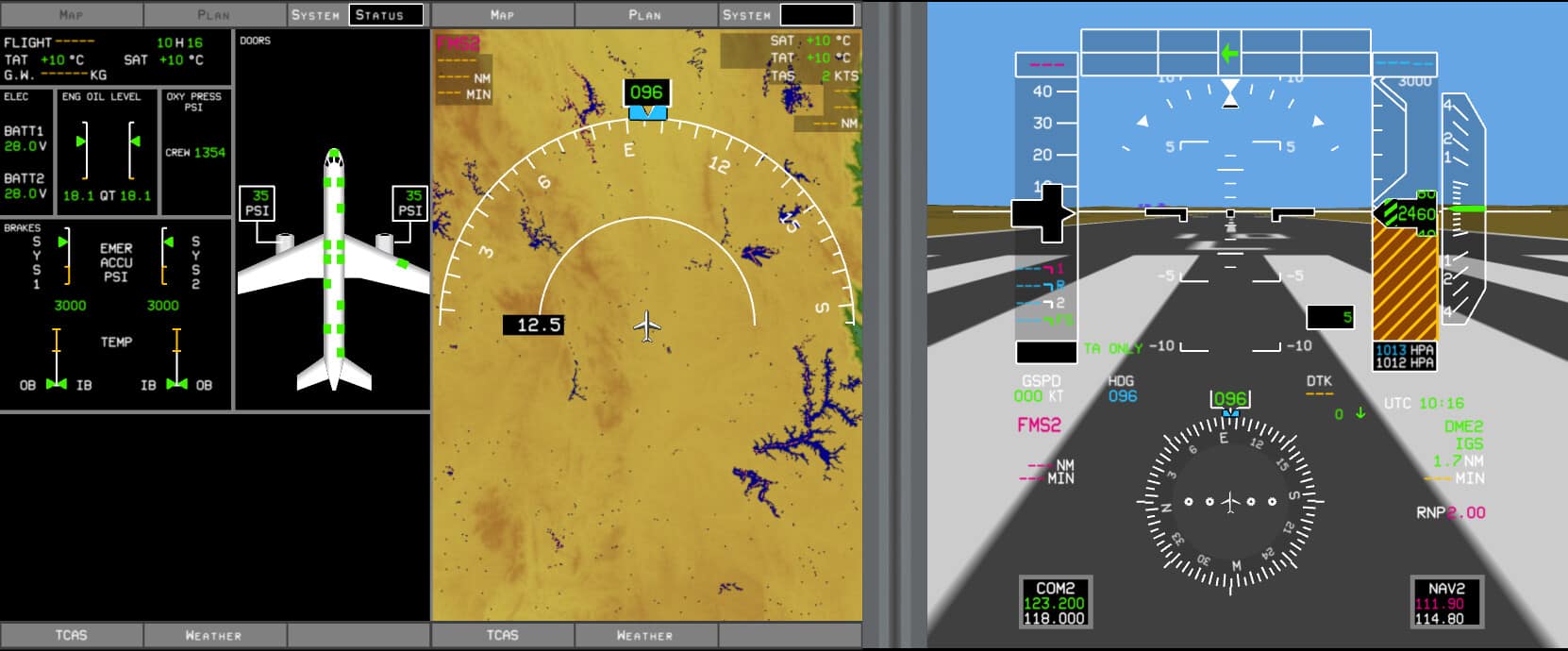
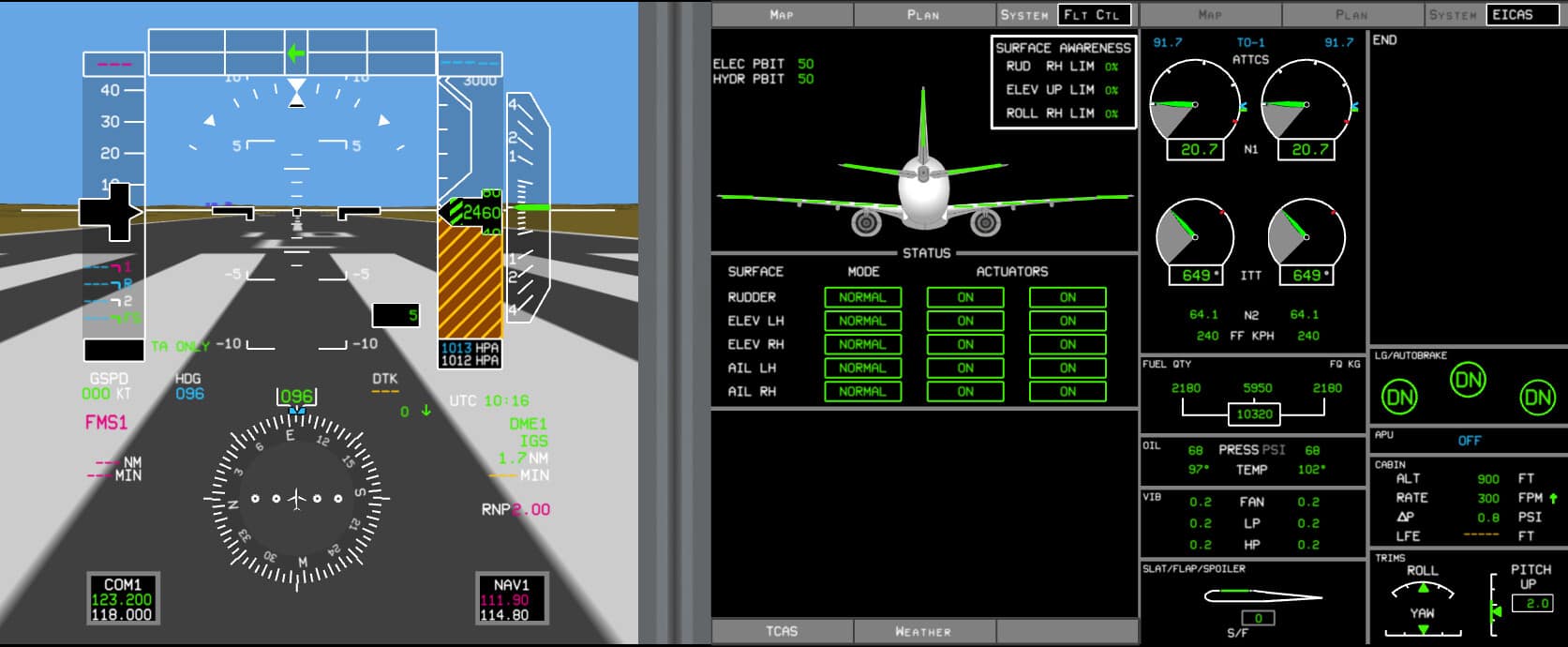
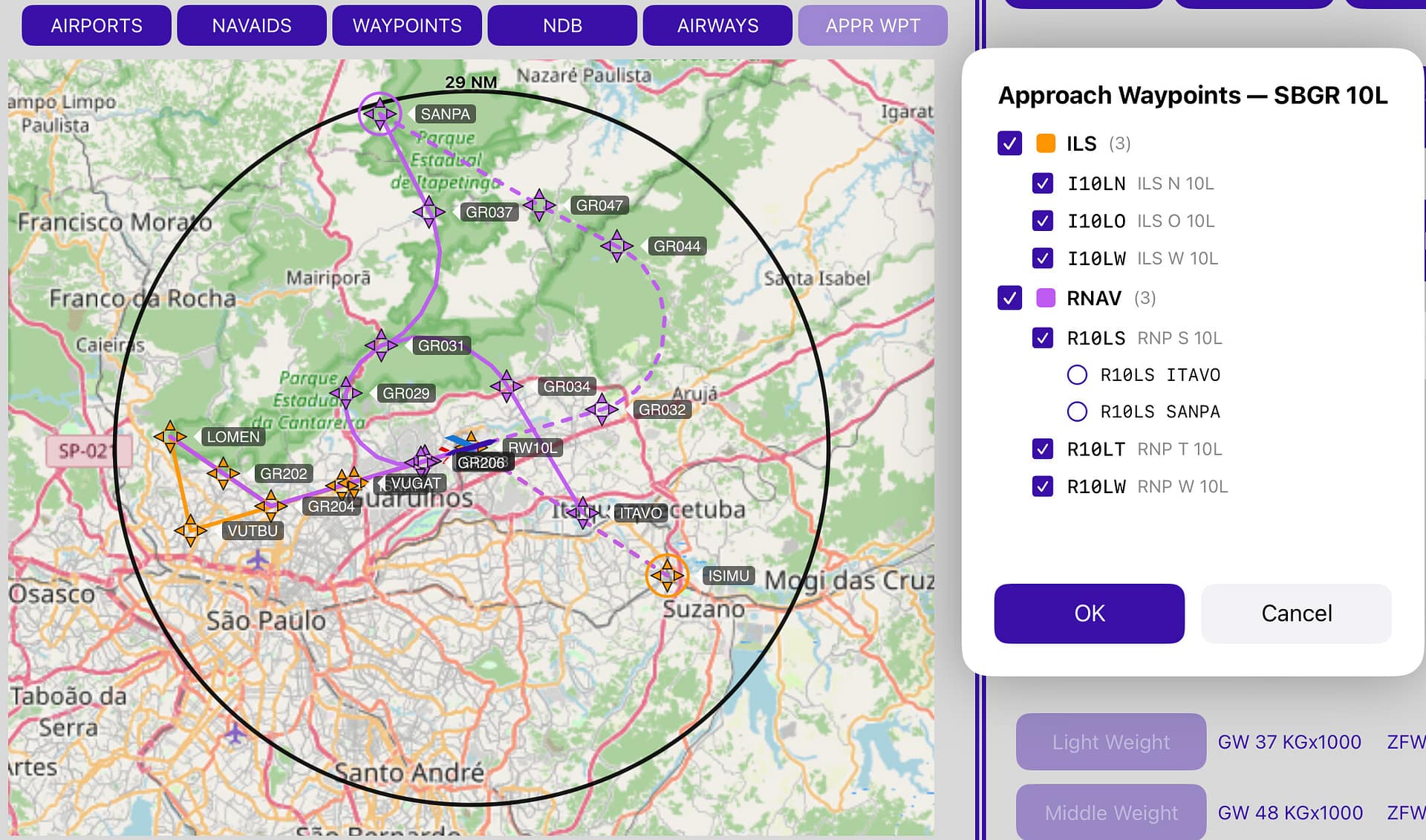
ILS CAT I and II with autoland and rollout guidance. RNP APCH and RNP AR with radius-to-fix (RF) legs and published vertical path. VOR, VOR/DME and non-precision approaches. Go-around and missed approach.
FMS
Departures, arrivals and airways, holds, missed approach, route to alternate, altitude and speed constraints, FIX INFO and radial/distance waypoints.
Autopilot and autothrottle
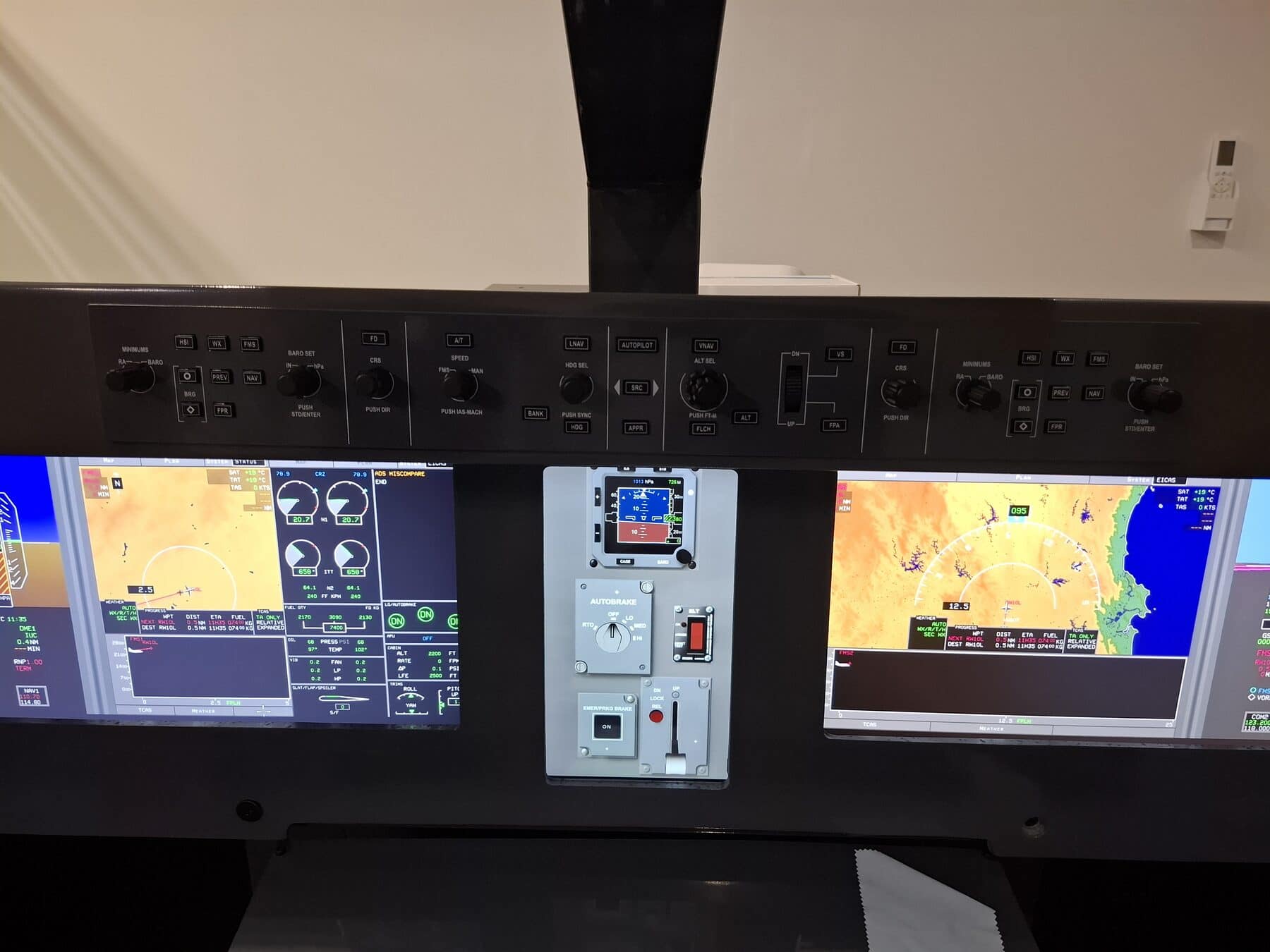
Lateral and vertical modes (LNAV, VNAV, FLCH, FPA, VS), takeoff and go-around, and autoland.
Displays
PFD, MFD with map, plan and vertical profile, EICAS with alerts and synoptics, display reversion and integrated standby instrument.
Radios and navaids
COM, NAV and transponder tuning through the MCDU and cursor control, DME, Morse code navaid identification and navigation source selection.
Navigation database
The customer's navigation database, updated every AIRAC cycle from the instructor tablet.
Other features
More than 170 malfunctions, immediate or scheduled.
The instructor selects malfunctions by system group and can schedule them to trigger by altitude, speed or time, without interrupting the exercise.
- Fire and smoke: engine and APU fires extinguishable with one or two bottles, or non-extinguishable; smoke in the cargo compartment, lavatory and electronics bay.
- Engines: failure with or without damage, hung start, igniter failure, oil temperature and pressure limits, dual engine failure with in-flight restart.
- Systems: loss of one or two hydraulic systems, electrical buses, bleed air, rapid or slow decompression, fuel and anti-ice.
- Avionics and controls: failures of displays, FMS, IRS, air data, radios, flaps and slats.
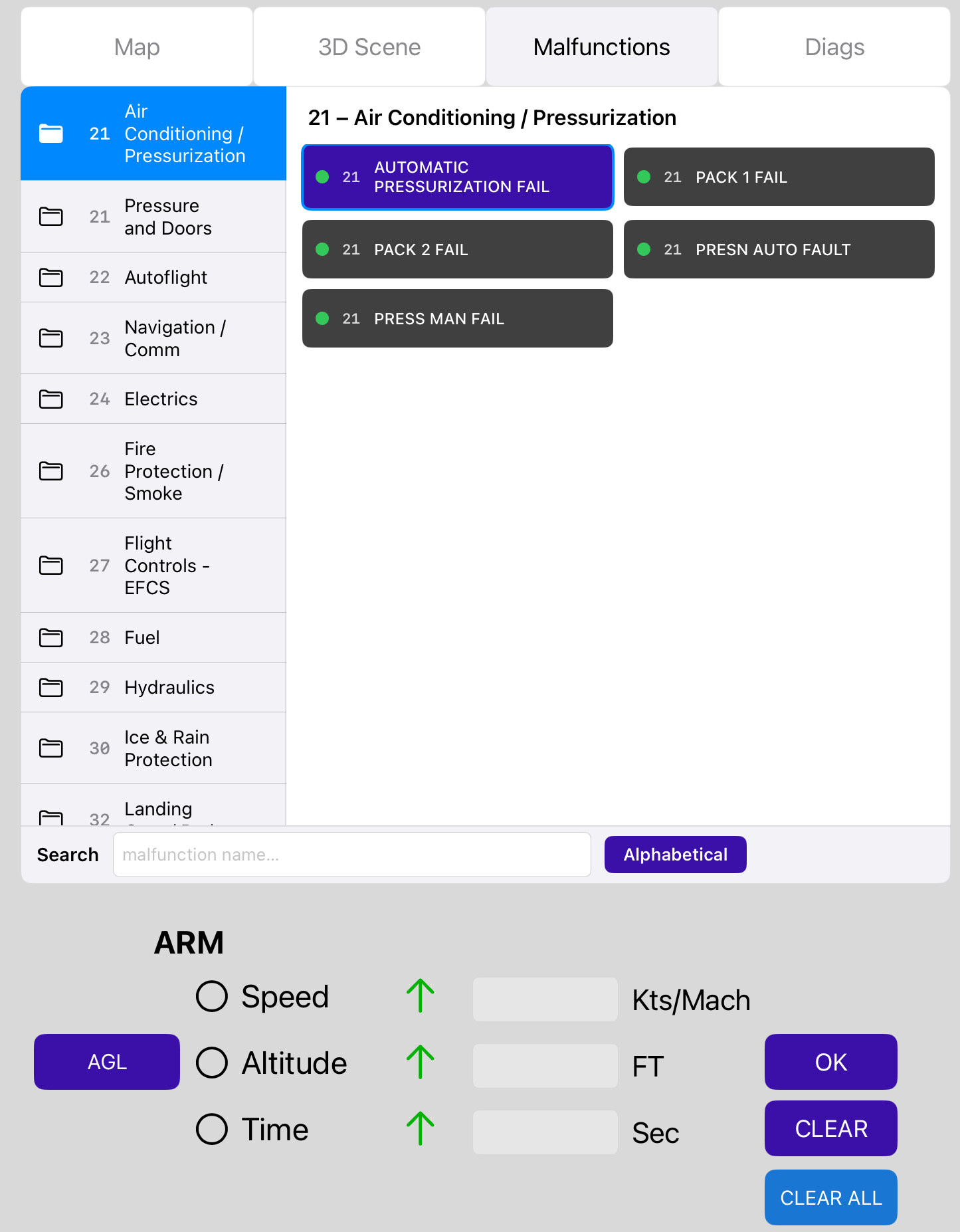
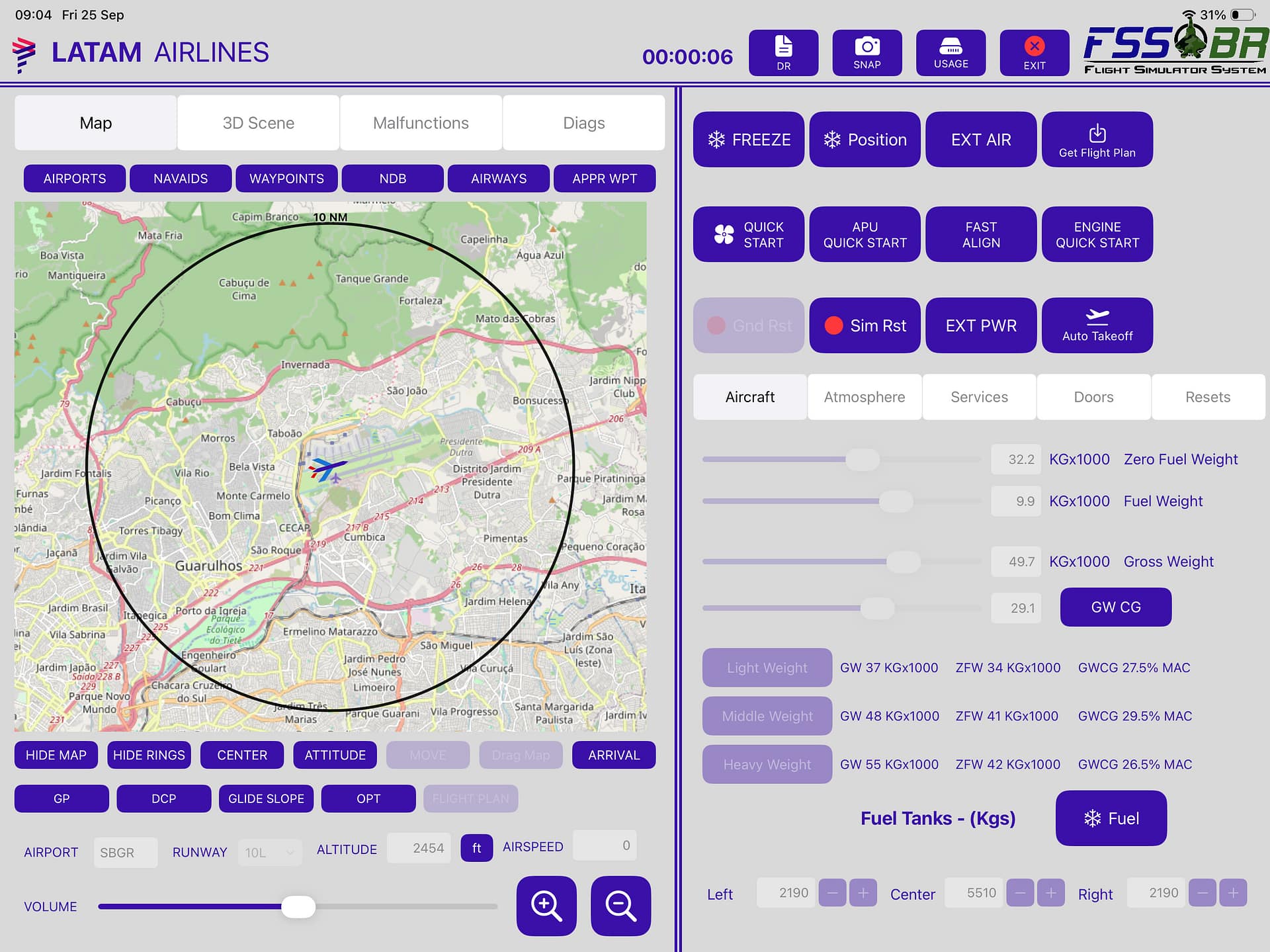
The entire session set up and run from a tablet.
Scenario
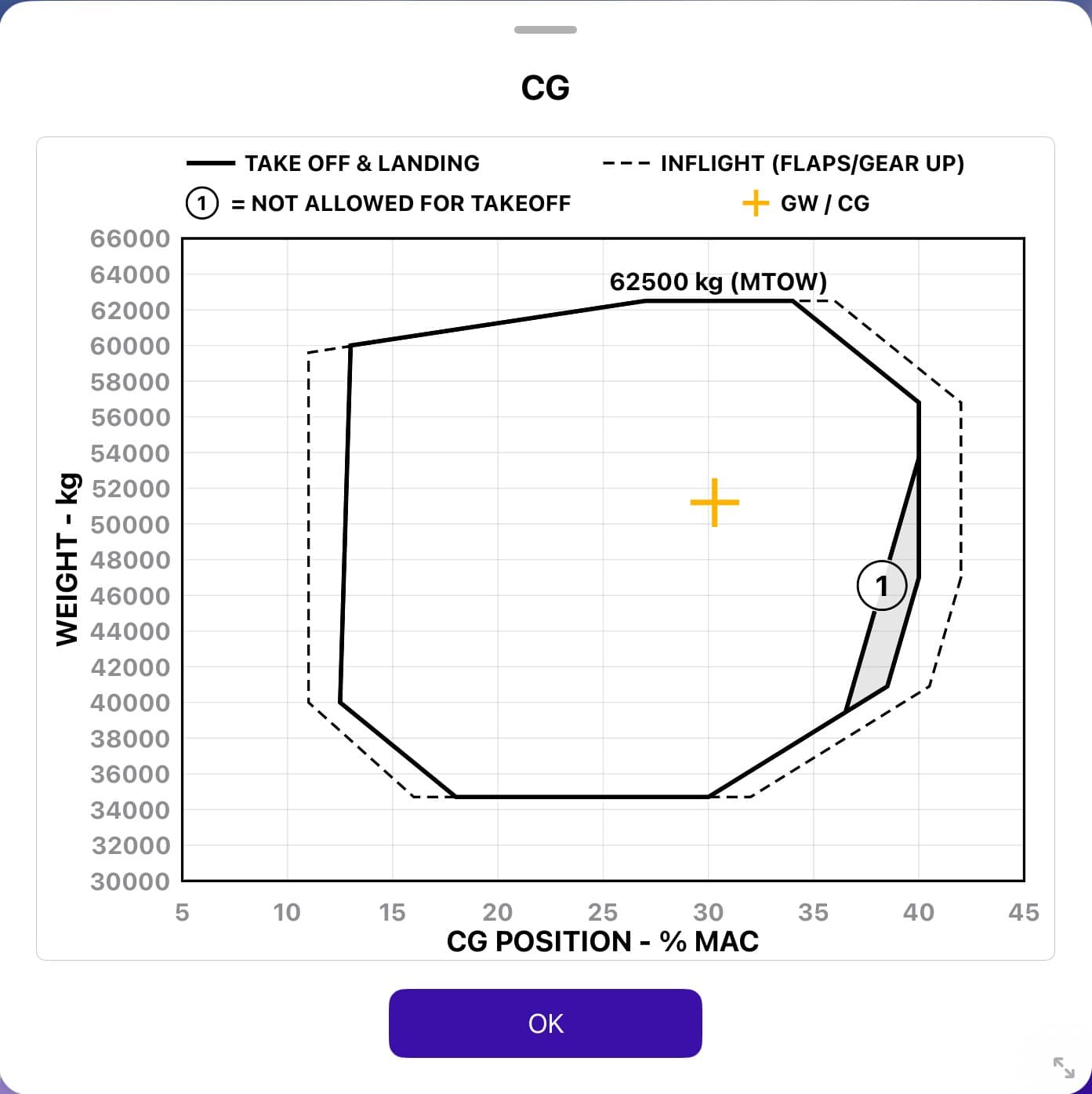
Repositioning anywhere on the map or directly onto a published approach. Weight, fuel and CG settings, layered winds, temperature and pressure.
Session pace
Total or position freeze, quick engine and APU start, fast IRS alignment and automatic takeoff.
Monitoring
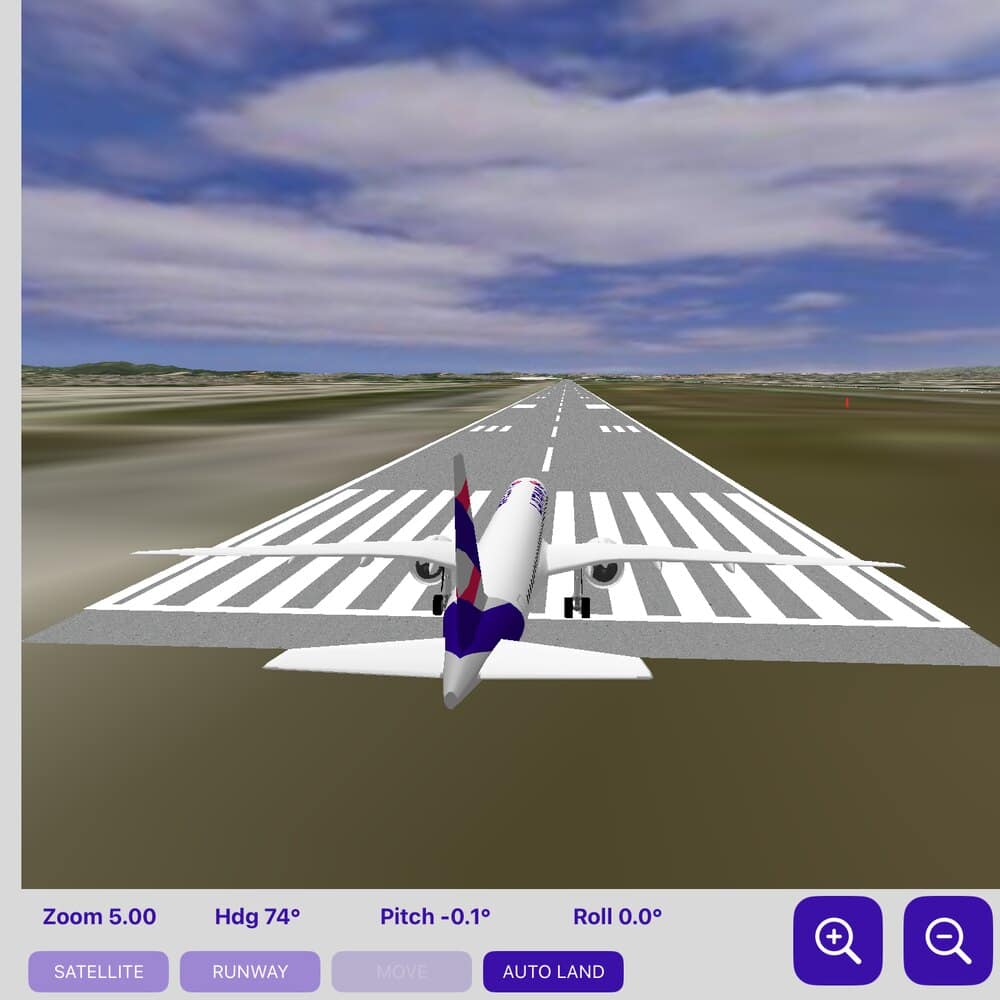
Map with airports, navaids, airways and flight plan, plus a 3D view of the aircraft.
Snapshots
Saved starting points with flight plan, FMS data and autopilot modes, to repeat the same exercise with other crews.
Doors and services
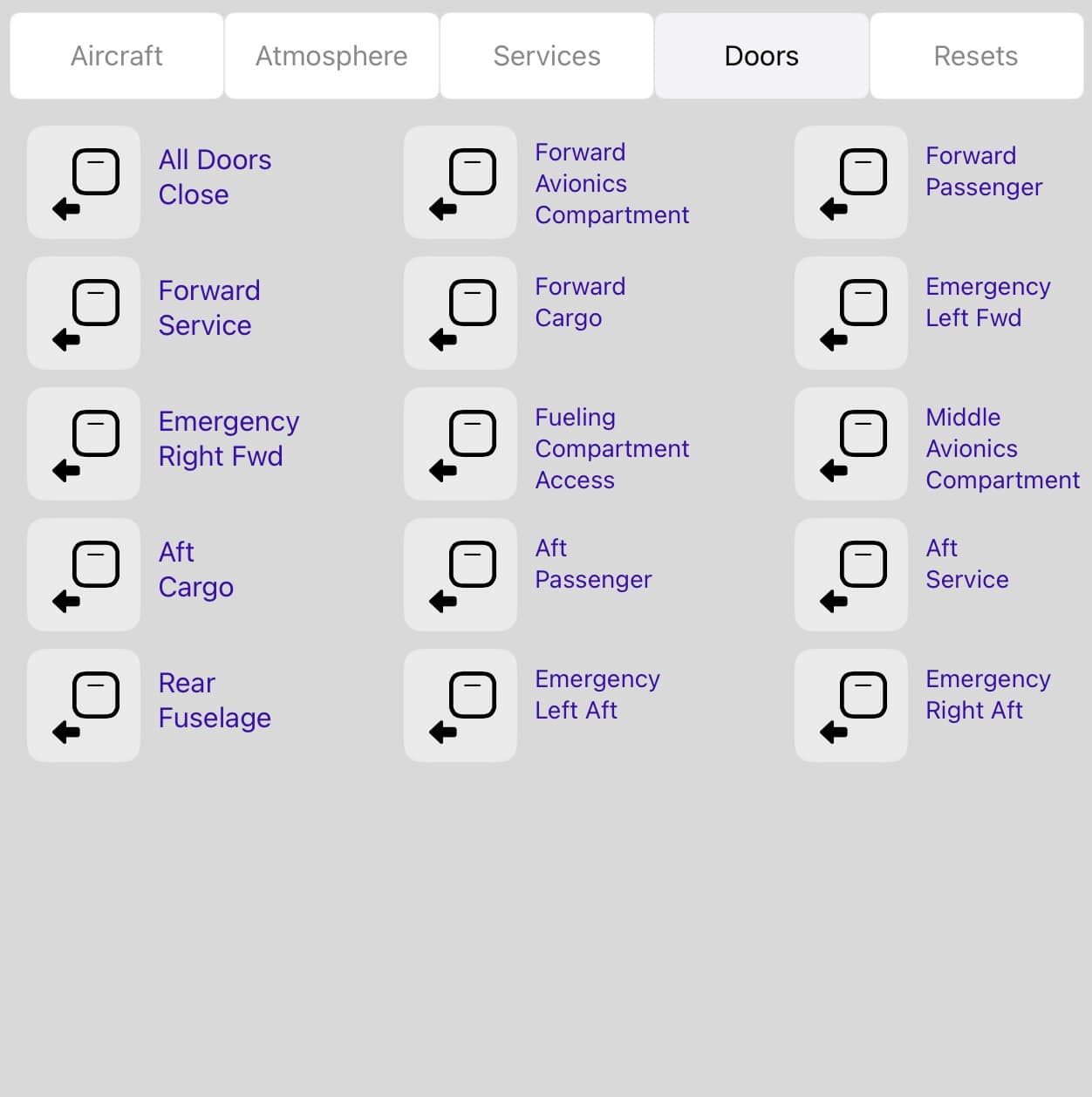
Door operation, external power and air sources, hydraulic reservoir levels and cabin calls.
Discrepancy log
The instructor logs discrepancies observed during the session directly on the tablet.
Level 4 FTD qualified by ANAC
Evaluated by ANAC, Brazil's National Civil Aviation Agency, and qualified as a Level 4 training device under RBAC 60.
MUSE simulation platform
Developed by FSS. Every FTD version ships with release notes, and new functions arrive through updates, supported by our team in Brazil.
Inside the E195-E2 FTD.
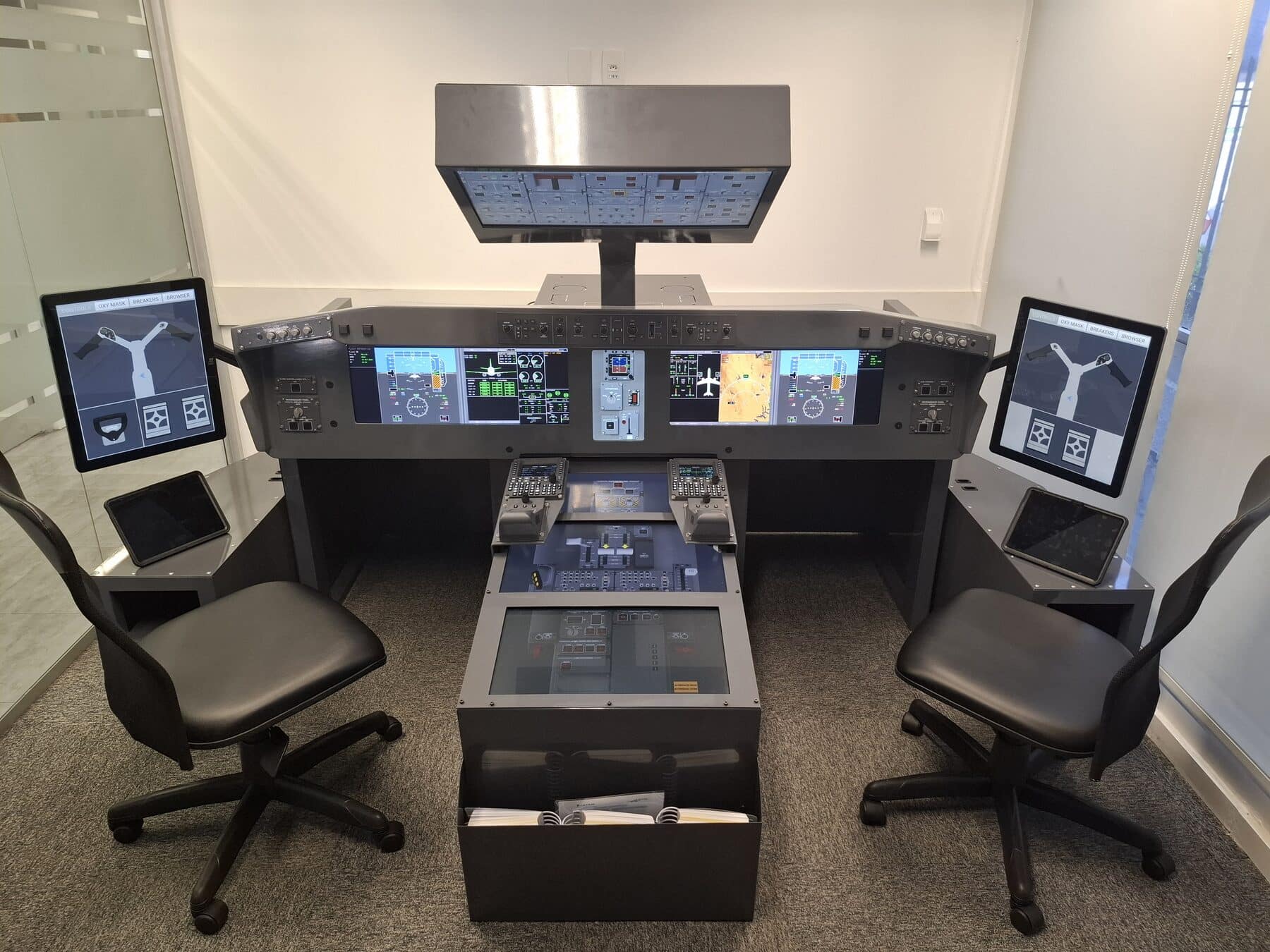
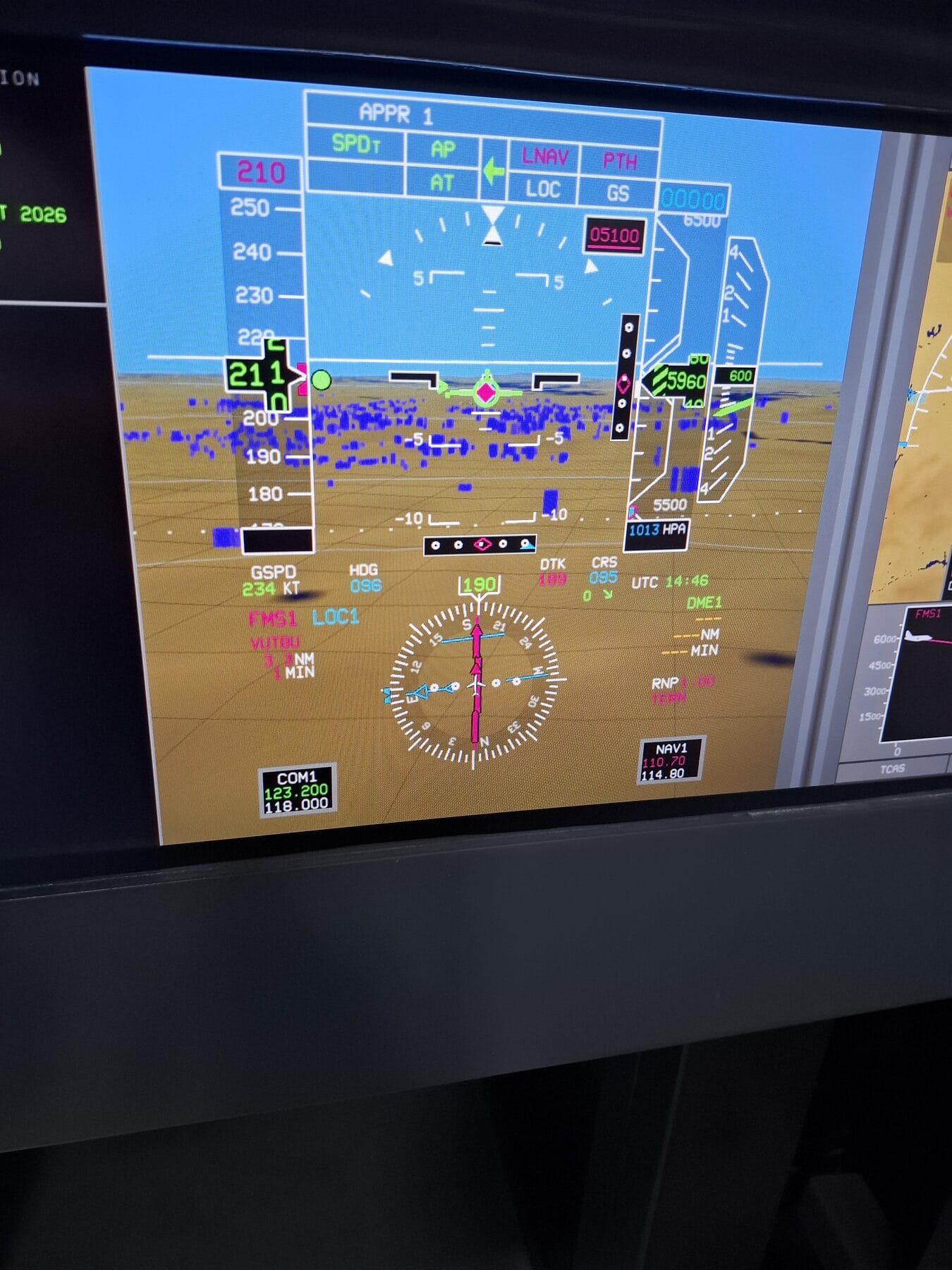
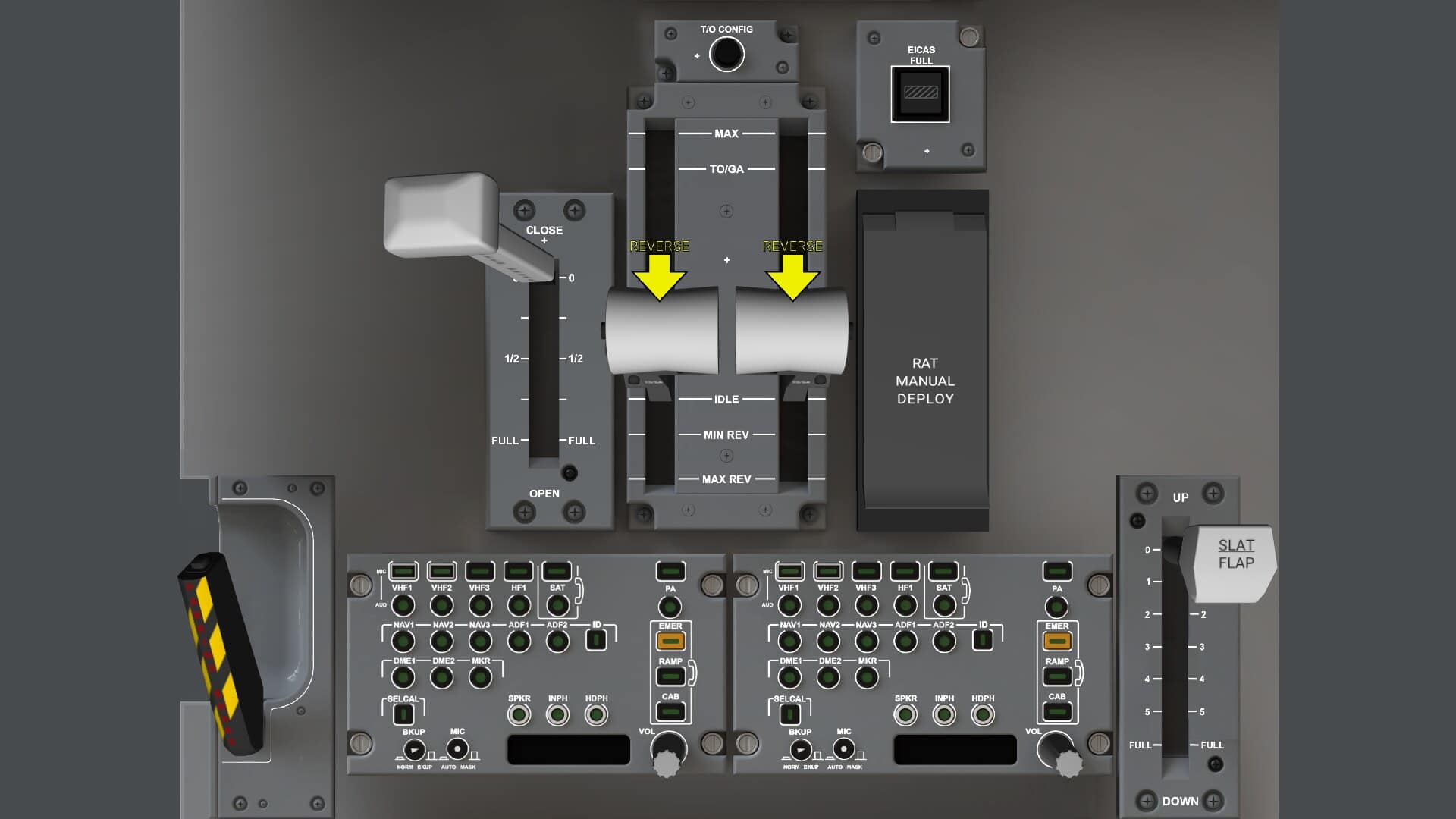
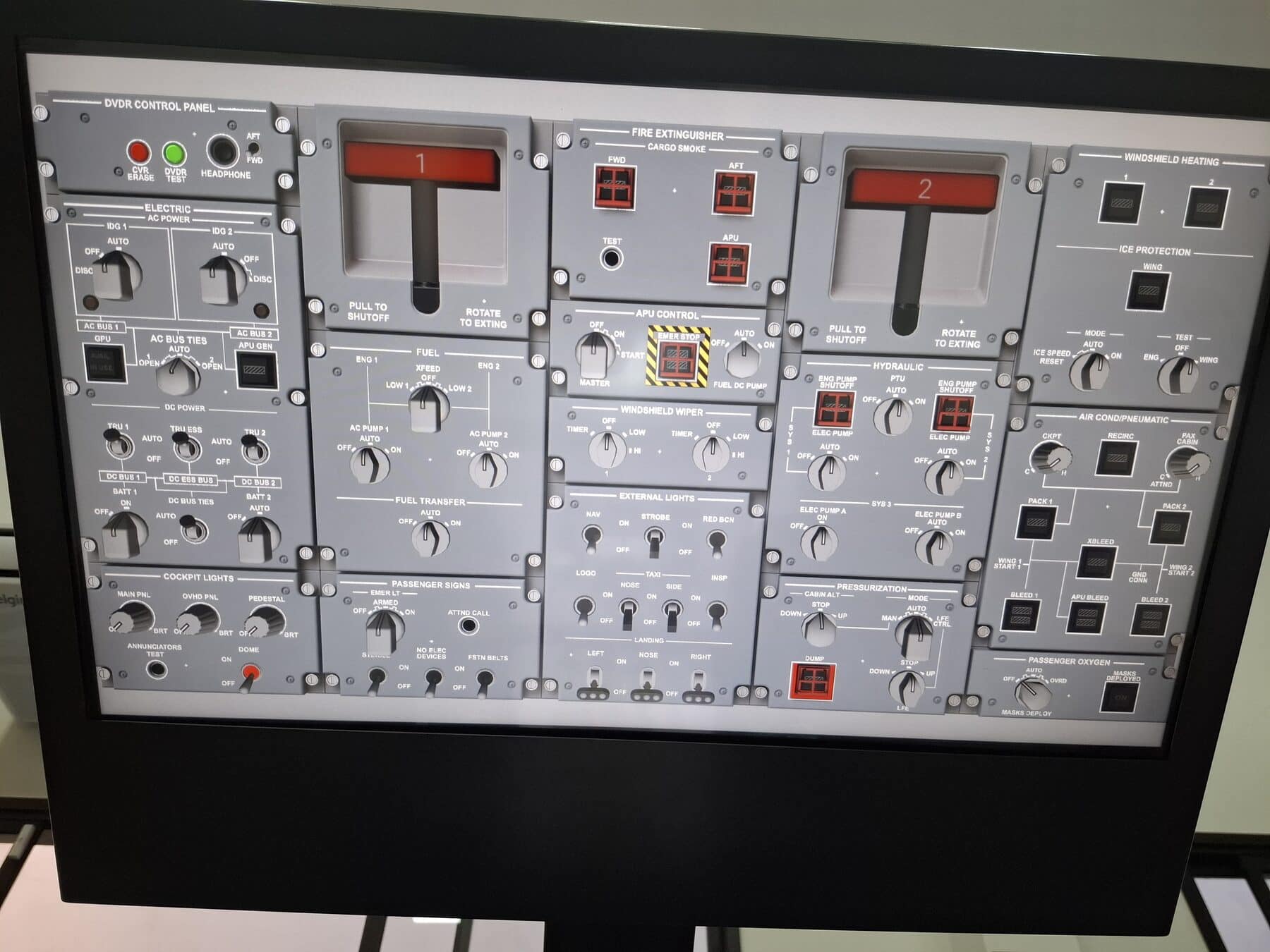
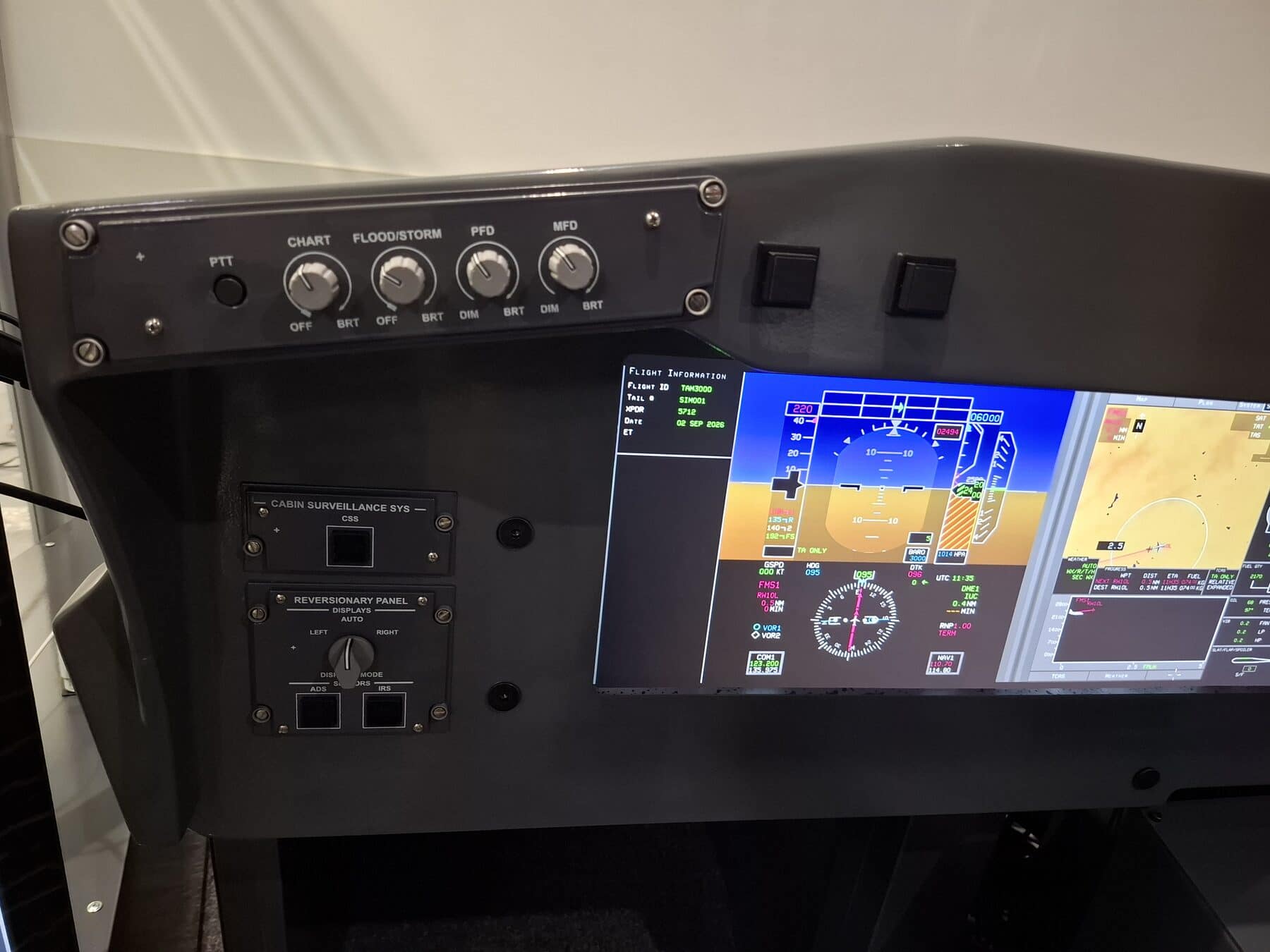
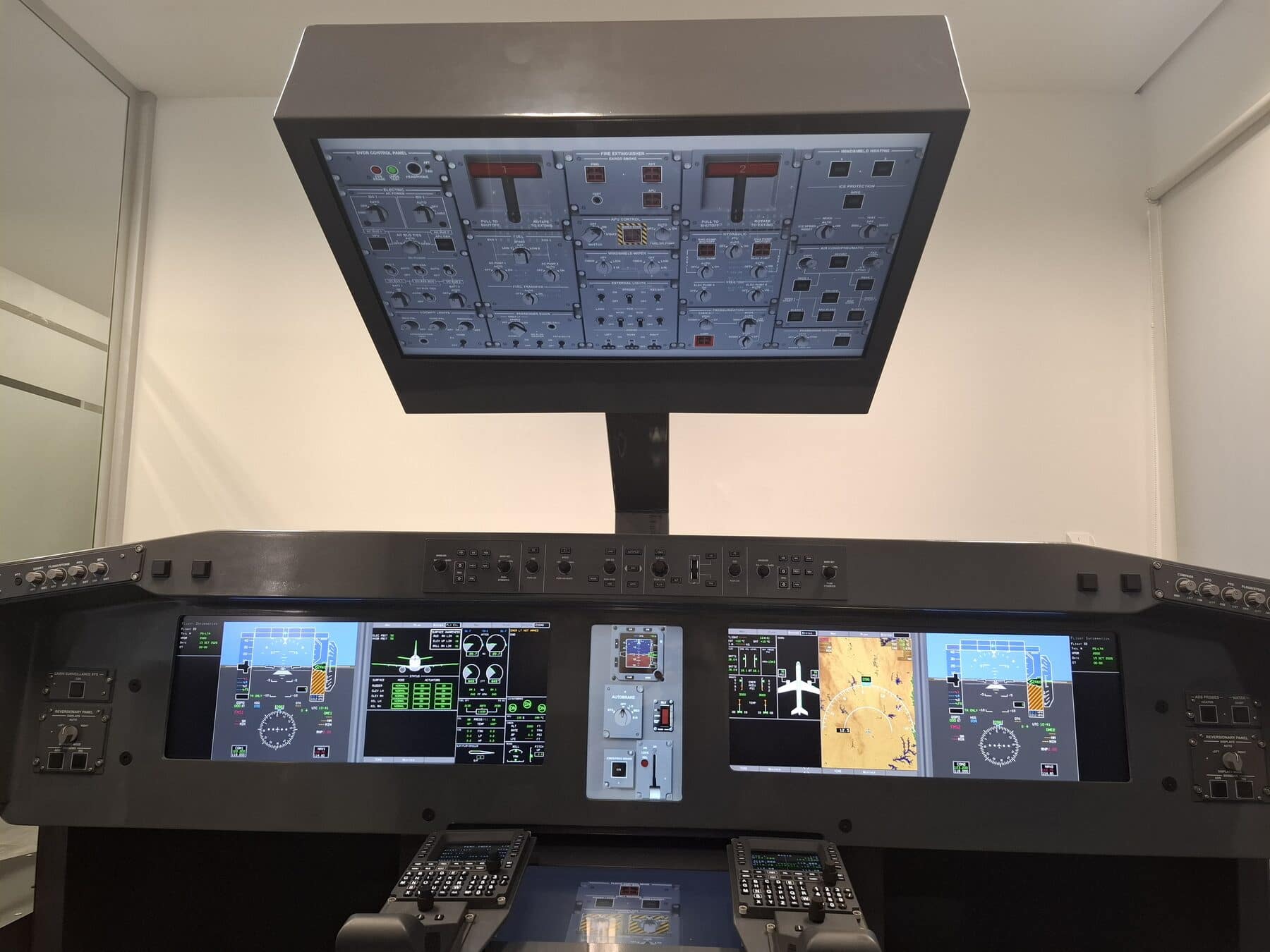
We have successfully delivered a qualified device to the LATAM Corporate Academy, in use since October 2026.
Request a presentation of the E195-E2 FTD.
We show the device in operation and discuss your training program and projects for other aircraft.
[email protected] · Vinhedo, SP, Brazil
E195-E2 and LATAM are trademarks of their respective owners.